
On the latest episode of Viewer's Comments, by the always entertaining Glen Fricker, the first comment he read was a bit vexxing
Here's a link to the video:
https://www.youtube.com/watch?v=aeQO-FJA5KI
Here is the comment:
"Hey Glenn! Note from a scientific engineer: the deciding factor between plugins and real gear is speed. The speed of transformers in an A class circuit will always trump a signal path that has to be ingested, decimation filtered, routed to a front side bus, allocated to RAM, processed via a flawed set of instructions, aliased (to linear math, when audio electricity is logarithmic). A class gear: a real representation of the signal (until you record digitally). Computers: will always be "flat" writing tools (unless you deal in logarithmic formats like DSD)."
Ok, aside from being word salad ala Deepak Choprah and a Gish Gallup that reminds one of Anita Sarkeesian or Ken Ham, on the few points that seem to be spelled out, I don;t think this is anything but a lashing Luddite rant.
"Hey Glenn! Note from a scientific engineer:"
Argument from Authority alert? Which field exactly? Are you going to present some scientific claims?
" the deciding factor between plugins and real gear is speed."
The deciding factor of what? Seriously
It seems like this is about something substantive about the sound, but if I'm, only given the information in the post, then the "what" must be Round Trip Latency
Is that it? Ok, yeah, removing converter latency and processor latency makes things faster. Yay! You win the internetz! But this is about audio and recording and making records, so the old price of beans in china thing comes up, I guess
But it gets more complicated than that....PLENTY of "real gear" is DSP based and that means, no functional difference from a plugin, so I guess he has to define "real gear" to mean some smaller subset of real real gear
"The speed of transformers in an A class circuit"
Do all "A class" (Class A?) circuits have transformers
"will always trump a signal path"
In what way? Distortion? Noise? Bandwidth? All else being equal, a signal path WITHOUT a transformer will ALWAYS trump a signal path WITH a transformer on those measurments
" that has to be ingested,"
Ahh, descriptive Poisoning the Well I guess. THough I suppose you could say that a male XLR is "ingested" into a female XLR. So what?
"decimation filtered,"
Which will in no way harm a properly bandlimited signal (you know, the stuff we listen to?)
" routed to a front side bus"
As relevant as "routed to channel Q"
"allocated to RAM"
No no, in PROPER audio, we allocate it to beads! Beads of Germanium I tells you, no wait, that was last week....allocate it to ice cream!
,"processed via a flawed set of instructions"
Which flawed set of instructions would those be? It would take some SERIOUS flaws to hurt the signal as much as a transformer would
,"aliased (to linear math, when audio electricity is logarithmic)."
Audio electricity, as opposed to the real world, where we call it "electricity" kind of like "medicine which has been proven to work" being called "medicine" as opposed to medicine that has been proven not to work, which we call "alternative medicine"
Electricity can be described as linear OR log. It can behave log when we want it to, it can behave linear when we want it to. YOU chose which you want to do....want to look for noise? Maybe set to linear. Want to look for noise at specific notes? Maybe set to log.
I will concede that aliasing can be a HUGE problem, one that we have many many many many many ways of dealing with. Kind of like how a failing capacitor can be a huge problem, which we have ways of dealing with.
"A class gear: a real representation of the signal (until you record digitally)."
Not really. Running thru either can alter the signal. Just a deepity, if even that
"Computers: will always be "flat" writing tools "
What does this even mean?
"(unless you deal in logarithmic formats like DSD)."
Even IF and I mean big fat, CITATION NEEDED, *if* DSD did better than PCM in an ABX test, so what? What are people going to be listening to this on? You got DSD playback on your iphone? Does your monitor controller have a DSD input? PCM works, the problem isn't PCM....If there's even a problem, which is still unspecified in the least bit in this post.
Wednesday, November 9, 2016


Friday, April 1, 2016
Thursday, March 31, 2016
Sunday, March 27, 2016
$500 USB Cable for audio
Woohoo, check out the Platinum Starlight 7 USB 2.0 cable
http://www.wireworldcable.com/hi-res-digital-audio-cables.html
Hey its only north of 500 bucks, better jump right on that for such a low price to upgrade the sound of your digital audio! Or maybe, use your head and buy a five dollar one instead. Up to you.
What does the manufacturer claim about the cable? " breathtaking vividness, focus and dynamic expression"
Well, hey...What units do you measure vividness and focus in? I don't see any spectral data on the website that should back up such a claim but oh well, what about dynamic expression? Are they claiming that a normal USB cable compromises the dynamic range? Are they claiming instead that this cable somehow expands the dynamic range above and beyond what is actually recorded? Should you just take their word that there's a difference worth 495 bucks? Or any difference at all?
They DO claim that this is the "first USB cable to exceed 10.2Gbps transmission speed". Awesome! except that the USB spec is for 480Mbps, or 21 times slower than the cable. I could see maybe making the cable twice as fast as needed, "just in case", but there shouldn't be anything to gain by going even that far.
How fast do you need anyway? For standard CD audio, we have 44.1khz sample rate, times 16 bits, times 2 for stereo, which comes out to 1.411Mbps. For 24bit/96kHz (no I'm not even going to get into whether or not 96khz makes any sense for regular playback in this post!) we need 4.608Mbps. Still nowhere near that 10.2Gbps.
As far as I can tell, the speed claim, "expanded geometry" and "Composilex 2 insulation" are what gives this cable all that magical, claimed, extra vividness, focus and dynamic expansion. I'm not buying it, should you?
Monday, March 21, 2016
Dangerous Territory
After a long pause, and due to the nature of the work i have been doing over the last few years, I want to delve into the debate about whether or not tone woods and guitar construction in general affect an electric guitar's AMPLIFIED tone. I know this subject is fraught with peril, so I want to be really careful.
Without question though, one place where people get jacked repeatedly comes from the attempt at chasing the dragon of that elusive magic guitar tone! We could all probably name several examples of outright fraud being sold to the aspiring guitar player without breaking a sweat. I am far more interested in what the science and logic in general have to say. I realize that a great many, perhaps the majority of people selling these claims actually believe them, so they aren't necessarily being malicious, even if they turn out to be untrue. I know this subject can ruffle some feathers, and I'm not really known for staying away from controversy, so this could get ugly really fast. Please try to keep in mind that offense is taken, not given.
I want to make it clear, hopefully as I did in the allcaps above that i am talking about the *amplified* tone of an electric guitar.
I'll say it again: I am only interested in this discussion in the signal that appears on the guitar's output jack.
So what are the claims I'm looking at?
1. The type of wood used on a guitar affects the electrical signal the guitar generates.
a) The effect the wood has on tone directly
b) The effect the wood has on mechanical qualities like sustain, which of course could also lead to a tone change
2. Bridge and nut materials (or locking vs standard nuts) affecting the tone. Here we can get into some insanely expensive stuff like the titanium replacement blocks for Floyd Roses (sheesh! Only 460 dollars for this guy! http://www.fu-tone.com/catalog/index.php?main_page=product_info&cPath=66&products_id=198 )
3. Construction methods (bolt on, set neck, neck-thru, etc) and their effect on tone
I really want to know first if there's even a mechanism for audibility, and one I keep stumbling over is the phenomenon of microphonic pickups. There may be a "there" there. Whether it passes the threshold of audibility in common use is another matter.
Sunday, March 25, 2012
Floyd Rose Part II
So to continue our floating tremolo talk, I was thrilled to death that another issue came up which is so near and dear to the critical thinking Don't Get jacked was meant to promote.
As many of you know, there exists a market for stabilization devices for tremolos. I could never hope to do justice to that subject the way this excellent website does. Go have a look, it is well worth your time.
Almost without exception, and yesterday was par for the course, any discussion of tremolo stabilizers is undoubtedly met with "well those things change your tone"
What a perfect call to arms for the friend of every critical thinker and the sworn enemy of every marketing company in the universe, the dreaded ABX test!
Now, you can conduct this experiment yourself without too much hassle. There is a problem that it wont be fully blinded, as you will know while supplying the raw data (actually playing the guitar) if the stabilizer was on or off, but the listening test should be decently blinded. Maybe have a friend do the playing instead.
I have done this a few times through the last 20 years, but certainly not enough to be statistically significant.
When doing this test I ask two questions
1: Identify which one has the stabilizing device
2: Which do you like better
The results have been VERY close to random for me.
Slightly more than random, people get #1 wrong
Slightly more than random, the guitar with the stabilizer wins #2
Why should that be? Again, I say, my sample data pool is too small and probably need many more test subjects, but I have a suggestion.
If I look at the waveforms generated by the stabilized and non stabilized guitars on a frequency analyzer, I can't tell the difference. Sometimes I think i can pick which is which, but then I realize I am just fooling myself. However! Looking at the waveform itself, the stabilized guitars almost always sustain longer, sometimes far, far longer on the plain strings than their nonstabilized counterparts.
Does more sustain sound better? That's the only real tonal difference I can quantify
Saturday, March 24, 2012
"There's a trick to making floyd rose's stay in tune"
..."thru proper tension"
A million variations on this one. A discussion I've had about four billion times with Billy Siegle, Michael Kaye, and Skully the great
Usually not such a big deal as far as unsinkable rubber duck myths go, but sometimes its a right pisser. Today, unfortunately for me, it was said in front of a band I was working with. By a real deal guitar tech. Youch
So lets examine this one. Let's ignore what is truly the skill of a good guitar tech, which is to get rid of all the binding and loose tolerances that can impede the mechanics of the tremolo system. Let's look at the actual physics involved:
From the biggest noob to the greatest guitar tech in the universe, a full floating tremolo will come to rest when string tension = spring tension
Period
No real space for magic in there.
Rest your palm on the tremolo to palm mute. Surprise! You just raised your string tension and lowered your spring tension
Do a bend. Surprise! You just raised the tension on the bent string and lowered the tension on the unbent strings.
Well you knew all that right? But what about this:
When you pick a chord, you change your string tension. And your spring tension! Yeah, that's that nasty crap sound that bugs the hell out of you on even a perfectly intonated floating bridge guitar when chords are played.
This is how it is on a fully floating bridge guitar. Don't like it? Too bad. As said so many times on this blog, the laws of physics do not even BEGIN to give a crap how you feel about them.
Monday, January 10, 2011
DASH the babies' heads against the rocks
http://www.nomadfactory.com/products/magnetic/
Seriously
Now I'm all for the fun of trying to emulate analog tape as much as the next guy. In fact, Nomad Factory has some pretty cool plugins, I like to look in on them from time to time.
But this line really caught my eye
"Mitsubishi's ProDigi and Sony's Digital Audio Stationary Head (DASH) were the primary digital reel-to-reel formats in use in recording studios from the early 1980s through the mid 1990's. With the MAGNETIC, Nomad Factory has captured the essence of DASH technology and made the sound of high-fidelity digital tape recording available in plug-in format."
Now, a lot of you know how much of a ProDigi and DASH nut I was, you think I'd be joyful over this thing. But lets look at that statement
"With the MAGNETIC, Nomad Factory has captured the essence of DASH technology and made the sound of high-fidelity digital tape recording available in plug-in format"
You know what the sound of digital tape is?
NOTHING
No sound, no nada. Digital tape is a storage medium. Whatever you put on it is what you get back...period
If you want a plugin to 100% faithfully, accurately and reliably emulate DASH or ProDigi, heres how you do it:
Let X=input
Let Y=output
Let X=Y
Done...or for the same result, don't put a plugin there.
Do they mean that they're emulating the sound of 250 pounds of early analog to digital converters?
Why???
Friday, July 3, 2009
Excellent Article about EQ myths
http://www.rhythminmind.net/presetblog/2009/03/digital-eq-fact-myth/
Not for the faint of heart. This guy matches up some holy grails with a tone generator and a meter putting a lot of the reality of what I've been saying on this blog into real nuts and bolts perspective
Not for the faint of heart. This guy matches up some holy grails with a tone generator and a meter putting a lot of the reality of what I've been saying on this blog into real nuts and bolts perspective
Monday, June 29, 2009
Just a Link today
I'd love to cover this most controversial of marketing hogwash factories one day, but for now, a very well thought out link about the percieved value of IP and those of us who create it.
http://www.truthdig.com/arts_culture/print/20090625_danny_goldberg_on_the_digital_music_revolution/
http://www.truthdig.com/arts_culture/print/20090625_danny_goldberg_on_the_digital_music_revolution/
Saturday, June 13, 2009
Sorry for the delay
I had a chance to record a Q and A type of thing a few days ago, covering some bits of audio this and that. I'll probably try and do mnore of these in the future. Have a listen and let me know if this is worth doing
Here's the mp3
Here's the mp3
Tuesday, November 11, 2008
Battle of the Bands
After the long hiatus, I'm going to switch gears a bit, to an issue that has been bugging me for a long time, but that affects our lifeblood, the bands, rather than us directly:
The rash of battle of the bands scams
Maybe you remember the 80's when some clubs were alleged to have so many scouts at that that bands were willing to "pay to play". A big break, a big exposure. Maybe it was worth it. Maybe not. But at least there was a chance.
From the early 90's the live band business model changed rapidly. It was rarer and rarer to find an actual booking agent at a club as time went on. At first, club owners were happy enough to count on a few bands to show up and hope they had a draw. But from the band's point of view of course, the club itself also better have a draw, or how was the group supposed to get new fans?
Political pressures hit the bars pretty hard with anti-smoking laws, anti-noise laws, and especially, anti-personal responsibility laws that opened bars up to criminal prosecution and lawsuits if they served the wrong person, and discrimination lawsuits if the refused to serve that same person.
Barflies are typically unaffected by the presence or lack thereof of a band, but the semi-regulars started staying home, or going to parties instead of the clubs. It became critical for the band to have a draw, just to feed the bar.
Enter the fake promoter
At this point, a new and especially slimey character came on the scene. What the bars really needed was a way of packing the house, or a way of covering their costs if noone showed up. While ideally this would be handled by a house booking agent, who had a vested interest in seeing the bar do well, it more and more often fell to a mercenary promoter.
The system often shook out to be the bar selling that particular time to a promoter, after which they had various schemes on how to split the money if costs were covered.
Who can you count on to pay? Well, if you are a promoter, then you are out there stapling flyers, calling people, bugging everyone and making sure the house is packed. EVERYONE is happy!
But hey, that would actually take doing actual work. A much easier way to go is to charge the bands themselves. Divide the amount the bar time cost by the number of bands and charge em, bingo!
But wait, bands know a pay to play setup when they see it right? We'll have to be sneaky about it. No problem. Change the no cover charge bar to a cover charge, 100% GUARANTEEING that noone new will see the band, and probably chasing out the barflies and regulars as well.
So do you go pound the pavement to make sure enough people show up to cover charge the bar into the black?
Hell no, you got a ready made sucker pool to bleed: The band. Now, all you have to do is figure how many tickets need to go to pay the bar, and divide the tickets among the bands. And tell the bands to "sell" the tickets. Of course, the band is working 40 hours a week or going to school, chances are they will have to just buy the tickets themselves.
If the band has to sell their own tickets, stop calling yourself a promoter.
Of course there are legit reasons why a band would have to sell their own tickets, but this isn't one of them.
So now, the band is paying to play, the new cover charge on the previous no cover bar precludes any exposure, and some shmoe is getting fat on a job that was previously done much better by a house booker. And with the booking agent, the band might actually get paid to show up!
Political and social pressures increase, bands wise up and club owners need to look for better ways to keep the doors open. Enter "The Battle of the Bands"
No longer just paying off a fake promoter for 1/5 the bar rent, the bands really get to bend over now. Nearly every club that has a live band is claiming to run a battle of the bands every night. You have no choice but to "battle"
In a lot of cases, the fake promoter takes the maximum capacity of the club (a number that has probably never been reached in the last ten years) and hands each band that many tickets to sell. This means, that if every band actually sold their tickets to actual people, the club would be over capacity five times over than legally allowed.
Every once in a while the battle of the bands actually has some prize at the end. The ways of determining who the winner is is dubious and the conspiracies abound. In the end it becomes a contest of who's parents can afford to front the most ticket money to get all the way to the end of a series.
Woe to the "working bands" who have long since died off, they'd never be able to afford $3000.00 to play a house with 10 people in it.
The system often shook out to be the bar selling that particular time to a promoter, after which they had various schemes on how to split the money if costs were covered.
Who can you count on to pay? Well, if you are a promoter, then you are out there stapling flyers, calling people, bugging everyone and making sure the house is packed. EVERYONE is happy!
But hey, that would actually take doing actual work. A much easier way to go is to charge the bands themselves. Divide the amount the bar time cost by the number of bands and charge em, bingo!
But wait, bands know a pay to play setup when they see it right? We'll have to be sneaky about it. No problem. Change the no cover charge bar to a cover charge, 100% GUARANTEEING that noone new will see the band, and probably chasing out the barflies and regulars as well.
So do you go pound the pavement to make sure enough people show up to cover charge the bar into the black?
Hell no, you got a ready made sucker pool to bleed: The band. Now, all you have to do is figure how many tickets need to go to pay the bar, and divide the tickets among the bands. And tell the bands to "sell" the tickets. Of course, the band is working 40 hours a week or going to school, chances are they will have to just buy the tickets themselves.
If the band has to sell their own tickets, stop calling yourself a promoter.
Of course there are legit reasons why a band would have to sell their own tickets, but this isn't one of them.
So now, the band is paying to play, the new cover charge on the previous no cover bar precludes any exposure, and some shmoe is getting fat on a job that was previously done much better by a house booker. And with the booking agent, the band might actually get paid to show up!
It gets worse
Political and social pressures increase, bands wise up and club owners need to look for better ways to keep the doors open. Enter "The Battle of the Bands"
No longer just paying off a fake promoter for 1/5 the bar rent, the bands really get to bend over now. Nearly every club that has a live band is claiming to run a battle of the bands every night. You have no choice but to "battle"
In a lot of cases, the fake promoter takes the maximum capacity of the club (a number that has probably never been reached in the last ten years) and hands each band that many tickets to sell. This means, that if every band actually sold their tickets to actual people, the club would be over capacity five times over than legally allowed.
Every once in a while the battle of the bands actually has some prize at the end. The ways of determining who the winner is is dubious and the conspiracies abound. In the end it becomes a contest of who's parents can afford to front the most ticket money to get all the way to the end of a series.
Woe to the "working bands" who have long since died off, they'd never be able to afford $3000.00 to play a house with 10 people in it.
Wednesday, September 3, 2008
Occam's Razor
I usually see this as "The simplest solution to a problem is usually the best"
Of course we know to keep signal paths as short as possible, but another use of Occam's Razor is the idea that, chances are, the simplest explanation for a phenomenon is usually the most likely.
Often you are sold solutions to problems you don't even have. In order to sell you something, the Marketing Machine will convince you that the fate of earth is dependent on you, yes YOU, lifting your cable off the ground in order to keep "the tone" from leaking through your floor, or some other nonsense. This often ties right into the next potential jacking:
Extraordinary claims require extraordinary evidence.
Do I REALLY need a tube in my preamp or all hell will break loose?
Every few days there's a new thread in the audio forums about how different DAW summing engines sound.
Notice how the claimant disappears or clams up when you ask for evidence?
Will I really lose all my highs if I don't use directional speaker cables?
After nearly a mile of 18ga cables thru the snakes, then the patchbays, then the routers, do I REALLY need to use a Super-Short 3 foot magical 12 ga mic cable between the mic and the snake?
I don't know
Three amazing words.
In many cases, hearing these words creates a lack of confidence about your situation.
Sales Weasel Management knows this and as a consequence, the training for sales weasels at many many retailers requires that those words be stricken from the weasels' vocabularies. In sales courses born from actual automobile dealerships, techniques are pushed to effectively just plain make stuff up instead of using the three magic words.
But when you go into guitar walmart, you'll notice theres always that one guy in the store. He certainly doesnt look as nice as the rest of his fellow weasels. His shirt may be untucked. His hair messier. He may have dirt marks from getting underneath gear, or picking up boxes to look for something. But there's one dead giveaway. He's the one guy in the store that has a line of people waiting to talk to him, while the rest of the weasels are hustling for people to con.
This is the one guy in the store who uses the words "I don't know". Counterintuitively, this guy actually does know far, far more than the rest of the staff. Often embarrasingly so, earning him the ire of his peers. He won't be there long, spending time to actually learn his job, and taking the time required to honestly and accurately evaluate his customers' needs doesn't earn him as many sales as the rest, though a few make up for it in large single sales.
Look for that guy!
Look out for warning signs from guys that have all the answers, but are clearly just making stuff up, telling you whatever you want to hear to get you to buy that thing.
Wednesday, August 27, 2008
Argument ad Populam
One of the easiest ways to get Jacked is to fall for The Argument from Popularity.
"Ninetynine out of a hundred thugs bust dey ill rhymes on an Avalon Mic Pre, yo, so you know its be da KRUNK."
"Almost all emo-weenies have a baritone guitar, so baritone is the best!"
"no one has ever heard of your product, so it must suck."
Sound familiar? The very idea that the popularity of something is a direct reflection of its quality. Could it have more to do with Ad Money? Nah, couldn't be...
By this same argument, Brittney Spears is better than Black Sabbath, because Brittney sold more albums
If you buy that, I have some prime real estate in the Phoenix Housing Bubble for you.
An extremely parasitic parallel to this is when you hear "industry standard" used to describe a product that no standards organization exists to bestow such a title upon it. When a sales weasel is fast and loose with the term "industry standard" you may be a mark for someone thinking you an easy target to play fast and loose with your wallet.
Judge any purchase on its intrinsic quality, rather than its popularity and you won't get Jacked.
Victim #1. Let the arrows fly
OK, I warned that this blog would be controversial. I said I wasn't going after the easy stuff. I won't be the least bit surprise if my reputation goes down even lower than the sad depths it already wallows in, but I call em like I see em.
So without further ado, I present, Victim #1. Analog summing boxes

Oh, I can feel the heat now. Attacking this sacred, holy grail. But so be it. Living at the intersection of the Mojave and Sonoran Deserts, heat is what I like!
When it comes to really evaluating audio, there are a few actual, meaningful measurements we can make. We can measure frequency response. We can measure distortion. We can measure noise. We can measure dynamic range, not just in signal to noise, but in signal to error, depending if we are looking at analog and/or digital.
Let's look at that evil digital summing.
Frequency response? Once the signal is digitized, unless you intentionally filter it, the frequency response here is going to be unity gain across its entire domain. Of course it'll be down a bit near the edges near nyquist, when it goes out the D/A, but nothing is going to happen to it in the DAW unless you want it to.
Distortion? Not unless you go over 0dBFS (and technically, not necessarily even if you DO go over)
Noise? Not unless you add it.
Signal to Error ratio? At 64 bit float, or even 32 bit or whatever some of the DAWs are using, who cares? And with today's levels squashed so hard that 8 bits would sound just fine, what are we worried about?
So just what is it we're trying to achieve with an analog summing box?
That Vintage Magic
You know, that unquantifiable, something that does something to your signal. To tell the truth, there are PLENTY of devices and functions we use that either add distortion or change the frequency response, or limit the dynamic range. For a point in the summing boxes' favor, we don't always WANT transparency.
But what do they claim?
"• Incredible Imaging
• More Punch and Detail
• Unbelievable Headroom "
If anyone can link me to the now famous post by Nika Aldrich about the claims regarding noise a few years ago, I'd love to post the points here, but even these three are enough to go on.
Incredible Imaging...so in my DAW when I pan something it doesn't actually go where I pointed it? Or does this mean something else?
More punch and detail..."punch"? In today's square wave, white noise approximated hypercompressed brick mixes? Ummm, OK. "Detail"? What do we use to measure that?
Unbelievable Headroom? You're right, I don't believe its going to give more dynamic range than 64 bit float.
Lets be honest, if there is ANYTHING these boxes are going to do sonically, its distort. A DAW is inherently WYSIWYG or it's broken. If this box does anything, its breaking the signal. Maybe its breaking it in a pleasing way, I'm not ruling it out, but let's not pretend that something can be more accurate than 100% accurate.
Let's go applying our earlier rule to these devices:
"If only I had used an analog summing box, this song would have been a hit"
Are you serious?
Far be it from me to paint an entirely negative picture, I'd like to give an example of one GIANT benefit these boxes will have for some people in some situations. Some of these analog summing units make it very easy to patch in and insert a piece of hardware gear. Your favorite compressor or EQ or whatever. Traditionally, DAWs have made this process a PITA, but some responsive DAW coders are even changing that. Still, in the case of these summing units, it is one less AD/DA when using the insert, so there's another point.
To summarize, I'd like to say, that these boxes may have their uses. But as the deciding factor in a mix? Not hardly. As something a "sales engineer" should be pushing on a noob? Hell no!
Maybe this device is right for you, but think before you spend, and you won't get Jacked.
So without further ado, I present, Victim #1. Analog summing boxes
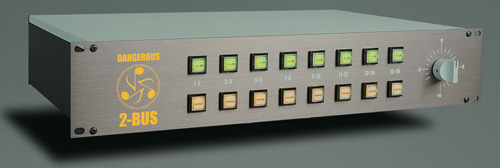
Oh, I can feel the heat now. Attacking this sacred, holy grail. But so be it. Living at the intersection of the Mojave and Sonoran Deserts, heat is what I like!
When it comes to really evaluating audio, there are a few actual, meaningful measurements we can make. We can measure frequency response. We can measure distortion. We can measure noise. We can measure dynamic range, not just in signal to noise, but in signal to error, depending if we are looking at analog and/or digital.
Let's look at that evil digital summing.
Frequency response? Once the signal is digitized, unless you intentionally filter it, the frequency response here is going to be unity gain across its entire domain. Of course it'll be down a bit near the edges near nyquist, when it goes out the D/A, but nothing is going to happen to it in the DAW unless you want it to.
Distortion? Not unless you go over 0dBFS (and technically, not necessarily even if you DO go over)
Noise? Not unless you add it.
Signal to Error ratio? At 64 bit float, or even 32 bit or whatever some of the DAWs are using, who cares? And with today's levels squashed so hard that 8 bits would sound just fine, what are we worried about?
So just what is it we're trying to achieve with an analog summing box?
That Vintage Magic
You know, that unquantifiable, something that does something to your signal. To tell the truth, there are PLENTY of devices and functions we use that either add distortion or change the frequency response, or limit the dynamic range. For a point in the summing boxes' favor, we don't always WANT transparency.
But what do they claim?
"• Incredible Imaging
• More Punch and Detail
• Unbelievable Headroom "
If anyone can link me to the now famous post by Nika Aldrich about the claims regarding noise a few years ago, I'd love to post the points here, but even these three are enough to go on.
Incredible Imaging...so in my DAW when I pan something it doesn't actually go where I pointed it? Or does this mean something else?
More punch and detail..."punch"? In today's square wave, white noise approximated hypercompressed brick mixes? Ummm, OK. "Detail"? What do we use to measure that?
Unbelievable Headroom? You're right, I don't believe its going to give more dynamic range than 64 bit float.
Lets be honest, if there is ANYTHING these boxes are going to do sonically, its distort. A DAW is inherently WYSIWYG or it's broken. If this box does anything, its breaking the signal. Maybe its breaking it in a pleasing way, I'm not ruling it out, but let's not pretend that something can be more accurate than 100% accurate.
Let's go applying our earlier rule to these devices:
"If only I had used an analog summing box, this song would have been a hit"
Are you serious?
Far be it from me to paint an entirely negative picture, I'd like to give an example of one GIANT benefit these boxes will have for some people in some situations. Some of these analog summing units make it very easy to patch in and insert a piece of hardware gear. Your favorite compressor or EQ or whatever. Traditionally, DAWs have made this process a PITA, but some responsive DAW coders are even changing that. Still, in the case of these summing units, it is one less AD/DA when using the insert, so there's another point.
To summarize, I'd like to say, that these boxes may have their uses. But as the deciding factor in a mix? Not hardly. As something a "sales engineer" should be pushing on a noob? Hell no!
Maybe this device is right for you, but think before you spend, and you won't get Jacked.
Tuesday, August 26, 2008
A Re-introduction to Critical Thinking
I would like to introduce a rule of thumb that should help greatly whenever considering a purchase, an upgrade, maybe even a fader move.
Ask yourself this question:
Will I ever hear, "if only (insert gear name here) was used on this song, instead of (insert whatever here) it would be a hit" ?
Substitute some pieces in there and you can get an idea whether or not something really matters much, if at all. For instance:
If only I had recorded at 192khz instead of 44.1khz, that song would have been a hit
or
If only i had used a Distressor on that guitar, the song would have been a hit
or
If only I had blindly followed the advertising/"articles" in Mix Magazine, that song would have been a hit.
So ask that, and keep asking it. Your wallet will thank you. What you may not realize is that your SONGS will thank you! That's right. Spend time and resources on the things that matter instead of the things that don't and you will always be that much further ahead.
Of course there are a few counterarguments to this rule, here's one of them:
I like to call this the "Accumulation of burrito wrappers over time leads to used diapers clogging up the Salt River"
Another way to look at this is to say "well, maybe that crappy thing by itself won't make much difference, but when there are a bunch of stages like that, of course it'll be worse!" Bad enough to spell the difference between a hit and a dud? Maybe, maybe not.
So lets follow this line of thinking. Let's say you had the noisiest, most distorted mic, feeding a severely bandlimited, noisy mic preamp, going into an 1/8" adapter on a consumer soundcard. You record and mix it in who knows what and record it to a cd player by running out the analog 1/8" jack into the CD Burner's RCA inputs after a radio shack adapter
That would be pretty bad wouldn't it?
Well, yeah, but that is an absolutely CATASTROPHIC chain of failures. Are you really going to do that?
Worry about the things that actually matter, and you stand a lot less chance of getting Jacked
Ask yourself this question:
Will I ever hear, "if only (insert gear name here)
Substitute some pieces in there and you can get an idea whether or not something really matters much, if at all. For instance:
If only I had recorded at 192khz instead of 44.1khz, that song would have been a hit
or
If only i had used a Distressor on that guitar, the song would have been a hit
or
If only I had blindly followed the advertising/"articles" in Mix Magazine, that song would have been a hit.
So ask that, and keep asking it. Your wallet will thank you. What you may not realize is that your SONGS will thank you! That's right. Spend time and resources on the things that matter instead of the things that don't and you will always be that much further ahead.
Of course there are a few counterarguments to this rule, here's one of them:
I like to call this the "Accumulation of burrito wrappers over time leads to used diapers clogging up the Salt River"
Another way to look at this is to say "well, maybe that crappy thing by itself won't make much difference, but when there are a bunch of stages like that, of course it'll be worse!" Bad enough to spell the difference between a hit and a dud? Maybe, maybe not.
So lets follow this line of thinking. Let's say you had the noisiest, most distorted mic, feeding a severely bandlimited, noisy mic preamp, going into an 1/8" adapter on a consumer soundcard. You record and mix it in who knows what and record it to a cd player by running out the analog 1/8" jack into the CD Burner's RCA inputs after a radio shack adapter
That would be pretty bad wouldn't it?
Well, yeah, but that is an absolutely CATASTROPHIC chain of failures. Are you really going to do that?
Worry about the things that actually matter, and you stand a lot less chance of getting Jacked
Welcome to Don't Get Jacked
Hello this is pipelineaudio. For those who don't know me, I am an uneducated, uncouth, unreasonable audio engineer and a general loudmouth across the internet's many "pro" audio haunts. I am here to bestow the accumulated wisdom of my years and years of inexperience regarding the purchase and evaluation of audio engineering techniques, philosophy and gear. In case you haven't noticed, the forces of the MI Marketing Machine are so powerful at this time, that you can reasonably and accurately predict which exact brands and models (and often in what quantity) of gear you can expect to see in a noob's rack. But of course, this isn't just for noobs!
The point of this blog isn't just to tackle the easy stuff, like Monster Cables, painting your CD's green, Shakti Stones, etc. No my friends. I will be taking aim right at the most holy of holies. The Untouchable, Unassailable Sacred Cows upon whos' udders many of the highest profile gear pimps greatfully suckle.
Yes, I will attack your favorites, Rodger's favorites, even MY favorites, with a critical thinking approach to see what really matters to the sound that reaches the end consumer who would rather steal than buy your music anyway.
Subscribe to:
Posts (Atom)

 Posts


